
I love to visit science museums across the globe and learn how science is communicated to different audiences and in different cultures. My son Maxen often comes along and teaches me how younger audiences can engage with content. Here are highlights from recent trips.

In October 2023 we visited the Mohammed VI Museum for the Civilisation of Water in Morocco. It is located on the outskirts of Marrakech and celebrates the water management strategies that helped underpin the city’s growth since its foundation in the early 11th century.
The museum is large – it spans three floors, occupies 2000m2 of exhibit space, covering two hectares including the gardens. The exhibit space includes interactive projections, multimedia shows and models. Maxen’s firm favourite at the museum was the large ice block installation on the entry floor that helped us to explore the unique physico-chemical properties of water. Moving to the floor below I was fascinated by the exhibits showing the spiritual rituals that gathered communities together in dance, song and feast to celebrate and democratise water. Moving from the high mountains the different villages in the valleys created rules for sharing water when supplies ran short. In this way rather than the resource being a potential source of argument and unrest it helped bring the communities together. There are some interesting aspects of land ownership that help foster this. The classic concept of Islam holds that all land is rahmaniya: it belongs to God but it is held in trust for the community. The museum also raised awareness of water and it’s more recent challenges linked to climate change and population growth.
Both Maxen and myself loved the model that showed how water is transferred from one side of a valley to another. At Tamesloht they devised a system that neatly sidesteps the costly construction of an aqueduct. Instead spanning the valley is a series of aligned elevated towers, each with a short syphon composed of two cylinders of different diameters. The water goes up the first tower through the narrow cylinder and flows out the top into the next. The difference in pressure helps push the water across the valley. Not only is this cheaper than constructing an aqueduct it also reduces the risk of breaking a large syphon by segmenting so that any problems with the duct are easier to detect and less expensive to repair. We spent two hours in the museum and loved it. There was more to see and we hope to return!
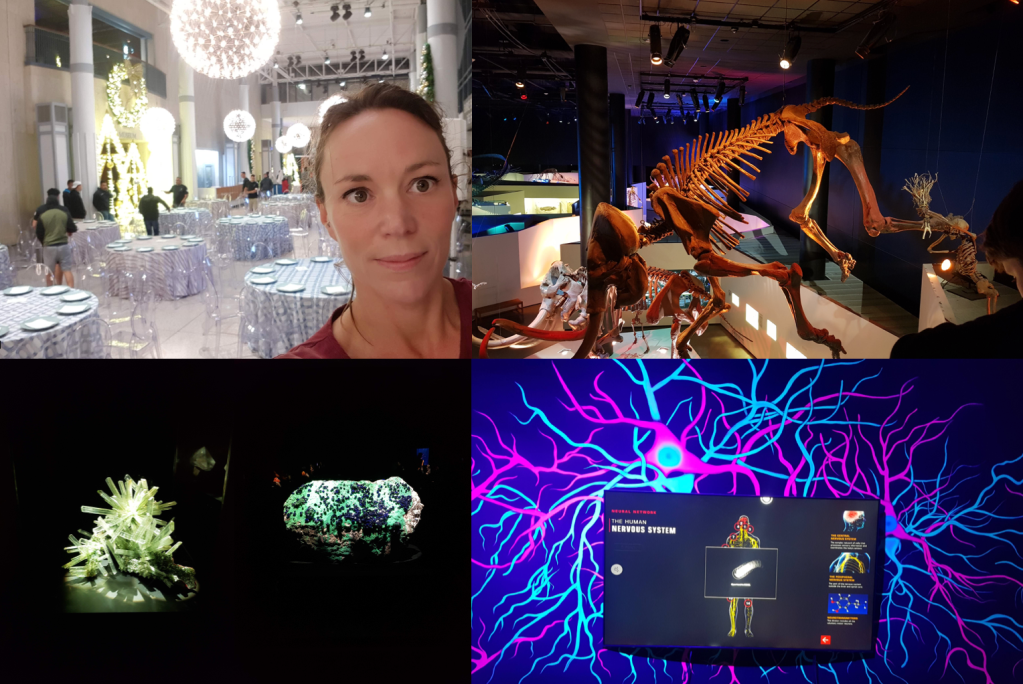
In November 2023 I was invited to the Houston Museum of Natural Science, in Texas USA. Founded in 1909, it has grown to an utterly vast multi-story museum comprising five floors of permanent exhibits, spanning astronomy, space science, Native American culture, energy, paleontology, chemistry, geology, seashells and Texas wildlife, alongside rotating special exhibitions. When I was there a fabulous premier of an exhibit exploring consciousness and the brain had just opened. They also had a fantastic area dedicated to rocks and minerals, and some fun historical skeletons dangling with human characters added for scale. I met the in-house team that designed and created all the impressive exhibits.
The museum receives around 2 million visitors a year making it one of the most popular museums in the USA. I was there for the opening of the new exhibit and a patron lunch to thank all of the wonderful donors that helped to make the museum a success. It’s free entry for the public but does not receive government financial help, so these patrons are essential. I hope to return to explore the museum further in the future!
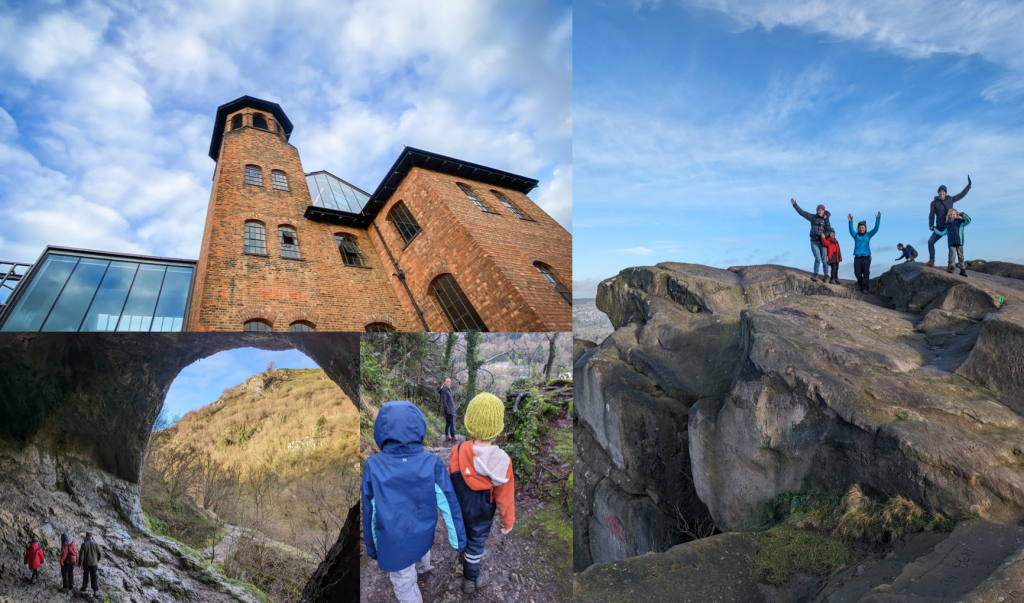
In January 2024 Maxen and I had planned a trip to Derbyshire, UK where we would visit the Derby Silk Mill Museum of Making. It has been designed to celebrate the area’s rich history of innovation and to inspire creativity in future generations. Sadly due to unprecedented flooding the museum was closed. So, instead we went boldering and hiking with extended family. Ever keen to bring the science underlying our reality into daily life I tried to strike up a conversation with Maxen, who is used to the Fen flatlands of Cambridgeshire, about how different landscapes form and their relationship with weather. But he wasn’t interested in chatting science with me just then. Instead he spent time happily chatting about Greek Gods with his cousin Phil and then went off with relatives to have a hot chocolate at a nearby cafe. Balance is everything!
 Dr Hannah Critchlow